Handler Responsibilities
What is your job when training?
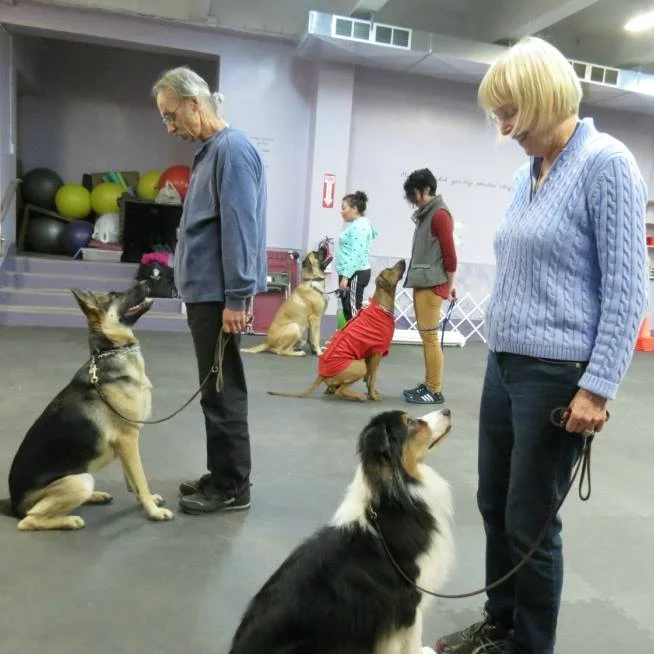
- Give clear, consistent commands. Give your dog a chance to respond before letting him know he is not allowed to ignore you.
- Be careful not to move ahead too quickly when your dog is learning new things. Always build on success - a solid foundation of each exercise is needed.
- If you want your dog to focus and pay attention to you, you must be focused and attentive to your dog.
- Make yourself fun and interesting to your dog. Keep the training sessions FUN.
- If you "change the rules" from day to day it can cause your dog to become frustrated, confused, anxious, and obstinate.
- To help the reliability of your dog's "performance" you will need to train in different locations with a variety of distractions. If you only practice at home, your dog will learn to work well there, but falter when in new location.
You need to remember that your dog WILL make mistakes, no matter how well he is trained - he is not a machine. Making a mistake does NOT mean he is a bad dog. It means he made a mistake! Have you made mistakes when you 'supposedly' know what you are doing? Think about what may have caused him to make a mistake: your dog distracted, frightened, not fully understand what you want, or making a conscious choice to ignore your command? All this needs to be taken into consideration before you decide how to proceed.
You will be building a working relationship with your dog that is based on understanding, honesty and mutual respect.